Season : Spring
Season : Spring
Kitchen
A Practical Guide to Seasonal Cooking,
Food Prep, & Reducing Waste at Home
A closer look at how we cook, store, and use food at home
— and the small habits that make a big difference.
How Our Meal Plans Work
We keep things simple, seasonal, and satisfying. Each week, you'll receive a set of recipes built around what's growing locally, using ingredients that are easy to find and quick to prepare. Every plan includes balanced meals made up of three core parts: a seasonal veg focus, a staple like grains or pulses, and a topping or flavour layer — such as herbs, dressings, or a protein of your choice.
Most meals take between 20–40 minutes, and many can be scaled up for batch cooking or next-day lunches.
We aim for flexibility: you can swap ingredients based on what you already have, and adjust quantities depending on who you're feeding
There's no pressure to follow every recipe exactly. These plans are here to give you structure, reduce food waste, and take the decision-making out of weekday cooking — while leaving plenty of space for instinct, taste, and rhythm.
Tips & Tricks
What to do when it doesn't go to plan
Even the best cooks burn the onions, overseason the stew, or forget the main ingredient entirely.
Cooking is part craft, part chaos — and we're not here for perfection. If something goes off-track, here's how to gently bring it back:
Too Salty?
Add a splash of water, a squeeze of lemon, or stir in a little plain yoghurt. Serving it with grains or bread can help balance the intensity.
Too Spicy?
Soften the heat with something creamy (yoghurt, coconut milk) or acidic (lemon juice, vinegar). A spoonful of something sweet — like honey — can also help.
Burnt Edges?
Scrape off what you can, stir through something fresh, and call it "well-roasted." It's rarely a write-off.
Sauce too thick?
Add water or stock a little at a time, stirring gently until it loosens.
Overcooked veg?
Blend it into a soup or mash it with olive oil and seasoning. Nobody needs to know.
Forget an ingredient?
Try a substitute — or just skip it. Most meals are more forgiving than they seem.
Cooking at home is a living process. It's allowed to be messy, intuitive, and a bit wonky — especially if it still ends in something warm, nourishing, and shared.
Cooking Equipment We Use
You don't need a fancy kitchen to cook well. Most of our recipes are designed to work with just a handful of reliable tools that many home cooks already have.
We focus on simplicity and efficiency — tools that can handle a wide range of seasonal recipes without taking up too much space.
We're not prescriptive, and you won't see us recommending a different gadget for every task. Instead, we build our recipes around tools that are versatile, durable, and easy to clean — helping you spend more time enjoying your food and less time doing the dishes.
A DUTCH OVEN OR LARGE LIDDED POT
For soups, stews, pasta, and one-pot meals
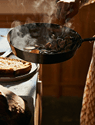
A FRYING PAN OR SKILLET
For sautéeing veg, crisping toppings, and cooking grains
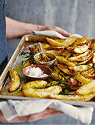
A LARGE roasting tray
For oven-roasted roots, traybakes, and slow-cooked dishes
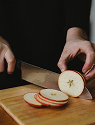
A SHARP KNIFE & CHOPPING BOARD
For everything from prep to plating
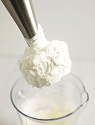
A BLENDER OR STICK BLENDER
Optional, but useful for sauces, soups, and dips
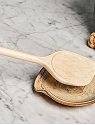
A STIRRING SPOON & METAL SPATULA
For mixing over the hob, baking, flipping and serving
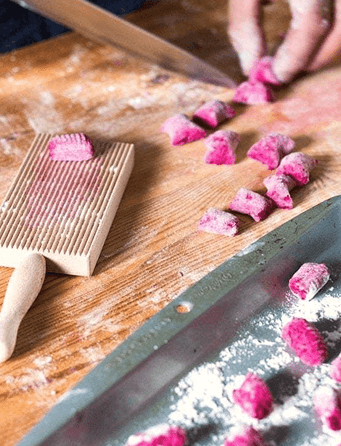
Tips & Tricks
Don't have everything on the list? No problem
Most kitchen tools have a workaround, and we're big believers in making do with what you've got.
Here are some common alternatives if you're missing a piece of kit:
No blender?
Use a fork or potato masher for soft ingredients. You can also finely chop herbs or veg for texture instead of pureeing.
No roasting tray?
Use a frying pan or any oven-safe dish. Just adjust the cooking time slightly if it's deeper or smaller.
No grater?
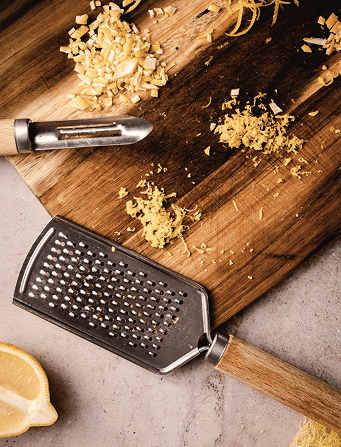
Try thinly slicing or finely chopping instead. For citrus zest, use a vegetable peeler and then mince the strips.
No steamer?
Place a heatproof colander or sieve over a pot of boiling water and cover it with a lid.
No measuring scales?
Use rough volume estimates: a handful, a mug, a splash. Trust your instincts — cooking is more flexible than baking.
No lid for your pan?
Use a plate, baking tray, or even foil to trap steam.
These aren't shortcuts — they're resourceful choices that help you cook with confidence and adaptability. The most important tool is curiosity. Everything else can be improvised.
Tips & Tricks
Kitchen Rituals & Routines We Love
Whether you're a confident cook or just getting started, a few simple habits can make the process smoother, more flavourful, and more enjoyable.
These tips aren't rules — they're just useful reminders to help you cook with ease.
Read the recipe through before you start. It gives you a feel for timing and helps you avoid surprises.
Prep your ingredients first. Chop, measure, drain, and gather everything before you switch on the heat.
Taste as you go. Seasoning is personal — and even the best recipe benefits from your own judgement.
Use a bowl for scraps while you prep. It keeps your workspace tidy and speeds up cleanup.
Save clean veg offcuts (like carrot tops, leek ends, herb stalks) for making homemade stock. Keep a bag in the freezer and add to it over time.
Warm up spices in oil before adding other ingredients. This helps release their flavour and fragrance.
Keep a small jug of water by your hob. Perfect for loosening sauces, preventing sticking, or adjusting texture as you go.
Give your pan time to heat up. Hot pans mean better browning and flavour, especially when sautéing or frying.
Avoid overcrowding the pan. It can lead to steaming instead of crisping — cook in batches if needed.
Clean as you go. It makes the whole process calmer and less overwhelming.
Let food rest if needed. Grains, roasted veg, and sauces often improve after a short pause.
Stay flexible. No fresh parsley? Use dill or coriander. Cooking is as much about adapting as it is following steps.
There's no single 'right' way to cook — just your way, built up over time. These small tips are here to support that process.

Glossary of Terms
Cooking language can be surprisingly technical — but understanding a few common terms can help you feel more confident in the kitchen. Here's a short glossary of words you might come across in recipes:
Al dente – Literally "to the tooth" in Italian — used to describe pasta or vegetables that are cooked but still have some bite.
Blanch – To briefly boil vegetables, then cool them quickly in cold water to stop cooking — useful for freezing or brightening colour.
Deglaze – To add liquid (like stock or wine) to a hot pan to lift the flavourful browned bits stuck to the bottom.
Fold – A gentle mixing method that incorporates ingredients without knocking out air — common in baking.
Reduce – To simmer a liquid to evaporate water and thicken it, concentrating its flavour.
Rest – Letting food (like meat, rice or roasted veg) sit after cooking to settle juices and develop flavour.
Sauté – To cook quickly in a small amount of oil or fat over medium-high heat.
Simmer – A gentle boil; small bubbles breaking the surface, usually used for soups and sauces.
Sweat – To gently cook vegetables (often onions or garlic) over low heat until soft and translucent, without browning.
Zest – The outer coloured layer of citrus peel, used for flavour. (Avoid the bitter white pith underneath.)
A Place of Practice
The kitchen isn't just where food is made —
It's where you build rhythm, find confidence, and connect with what you're eating. Mistakes are part of it.
So are experiments, improvisations, and tiny victories. This page is here to support your everyday cooking — from the tools you use to the way you learn. Trust your instincts, take your time, and don't be afraid to adapt. You're building knowledge with every meal.
Never Miss a Beet
Get hot off the harvest, exclusive weekly recipes, seasonal tips and stories- straight to your inbox.
© EAT THE LAND 2026
Website by storiesstudio.coNewsletter Sign Up